The measure aims to have 20% of the fleet composed of 100% electric buses by 2024
By Décio Costa |Translated by Jorge Meditsch
A determination issued by the City of São Paulo orders that, beginning by October 17, 2022, all new buses to be operated in the city’s public transportation shall not be powered by diesel. The measure was released last Friday, 10/14, in a circular sent to the public transportation concessionaires. The news agency Diário do Transporte had access to the document.
In a public note, the city administration confirms the letter sent to the bus companies and makes clear its determination. “With the change, the concessionaires will not be allowed to buy diesel buses, but only vehicles complying with the pollutant emissions reduction schedule foreseen by the Law 16.802/2018 and in the current contracts, as electrics.”
According to the note, the measure aims to fulfill the Climate Change Law’s emission reduction goals, which sets a 50% emission reduction by the fleet up to 2028 and CO2 neutrality by 2038. To achieve this, the administration wants 20% of the public transportation fleet composed of 100% electric buses by 2024, a volume of about 2.6 thousand units.
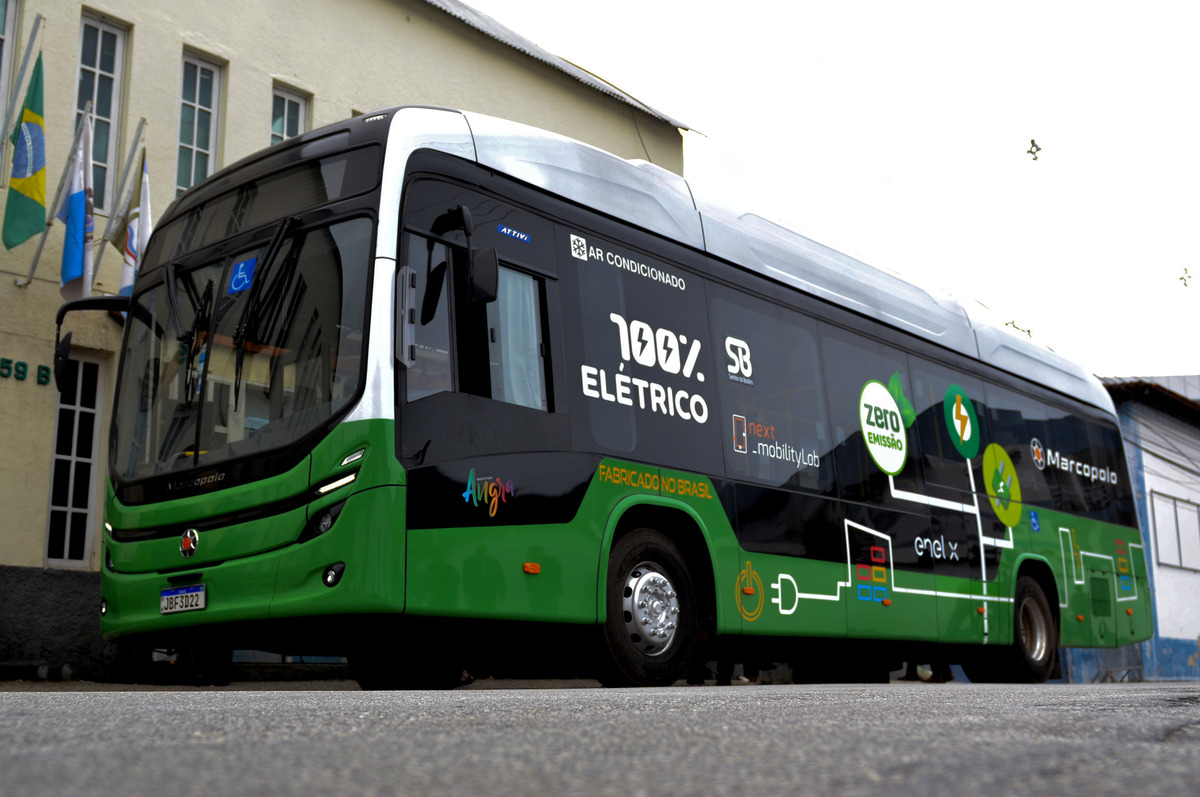
Currently, the city’s electric bus fleet has only 219 units, 201 of them trolleybuses powered by a suspended electric wire net, and just 18 battery-powered. In Brazil, only the Chinese BYD, Eletra, Marcopolo and Mercedes-Benz offer 100% electric buses. Even though most of these companies are just beginning production or still in tests, offering only large models.
To achieve the municipal management goal, the concessionaires should put into operation an average of 100 electric buses per month for a little more than two years. The determination also faces the costs and the infrastructure needed for operation. An electric bus can be three times more expensive than a conventional diesel model, and the operators will need to invest in charging stations.
Questioned by radio CBN on Tuesday, 10/18, mayor Ricardo Nunes said the costs would dilute with time. “At the first moment, the electric bus is more expensive, but as there is no more spent on diesel and the maintenance costs are lower, the investment pays for itself.”
Diesel buses will remain in operation until the end of their life cycle, established in 10 years of use. The determination came in a moment of transition of the environmental legislation toward the Proconve P8 norms, equivalent to Euro 6.
From January 2023, all heavy vehicles produced in the country shall meet the norm, which should reduce particulate matter by 98% and NOx by nearly 100%, compared to the program’s first phase.
SPUrbanuss, the city bus companies association, was contacted by AutoIndústria, which is waiting for a position on the matter.
Photograph: Marcopolo
Complexo com pistas de testes para desenvolvimento de tecnologias e veículos começa a ser construído…
Modelo lançado em 2019 bateu recorde de licenciamentos no ano passado
Rodrigo Soares é vice-presidente e Fernando Alves, diretor financeiro
Nova tecnologia do modelo promete recompor até 97% da capacidade energética da bateria em 9…
São 20 vagas e os interessados devem se cadastrar no site da Fundação Iochpe até…