Ethanol flex hybrid is one of the priorities, according to Alexander Seitz
By Alzira Rodrigues | 6/22/23 | Translated by Jorge Meditsch
Volkswagen keeps a 12 strategic members Suppliers Council to discuss new technologies that need to be nationalized, including electric and electronic components extremely important when the company invests in the development of an ethanol flex hybrid model.
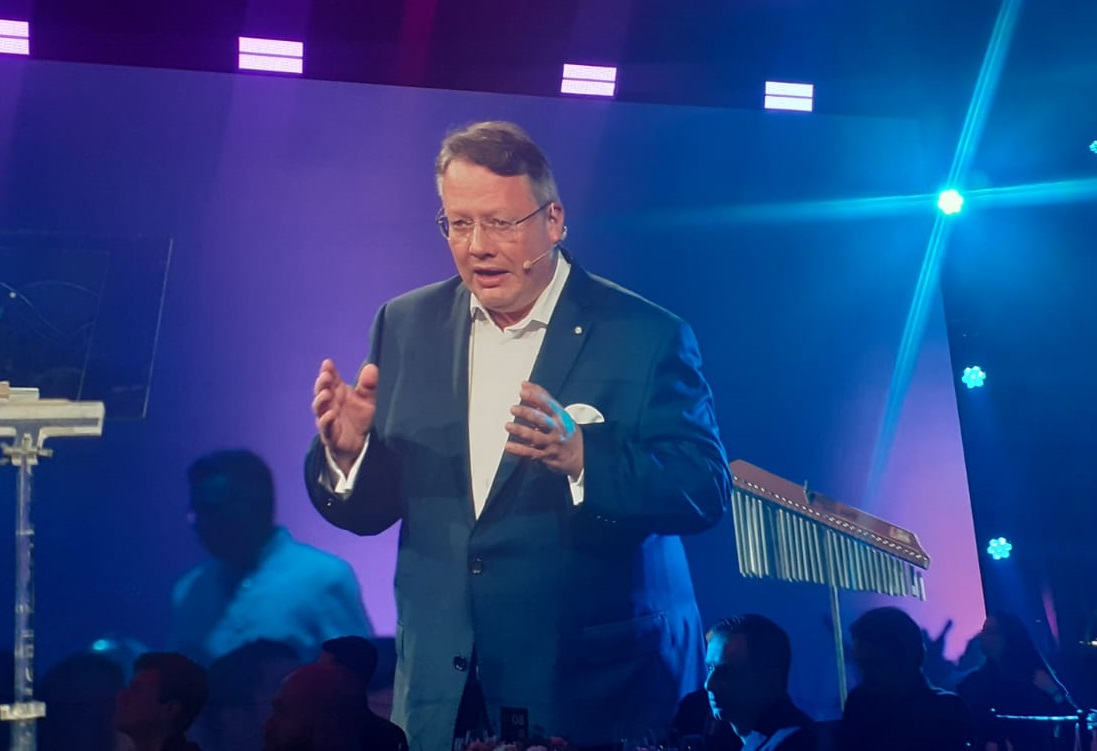
The information about the brand’s localization plans was revealed by Alexander Seitz, Volkswagen’s president in South America, before the event The One, which awarded the brand’s best suppliers on Wednesday. 6/21.
The executive explained that the 12 council members council is rotative but always keeps what is most relevant strategically regarding innovation and electrification. He did not anticipate the flexible hybrid launch date in Brazil but assured there is great interest from suppliers to participate in the project.
Seitz defended once more ethanol as the best way to be followed in Brazil toward electrification. “With the flexible ethanol hybrid, we will achieve the same CO2 emission level as a 100% electric car: “The electric vehicle is the future, but its dissemination will happen at different speeds worldwide”.
Regarding items to be nationalized during the flex hybrid development, he remembered that the brand’s combustion engines already use ethanol, so this is a part of the product already solved. About batteries, he said that there are companies producing locally, such as Moura, “which can be a candidate to participate in the project”.
The brand’s entry hybrid using either ethanol or gasoline is part of a joint study by South America’s Volkswagen, Skoda and Volkswagen India, as Seitz revealed last November at the inauguration of the biofuels study center at the plant of São Bernardo do Campo, SP.
According to Volkswagen’s president, it’s easier to nationalize the electric motor than automatic transmissions: “This component is made on large scale in Japan, and the Brazilian volume doesn’t justify investing in localization. It is possible that in the future, the automatic transmission could be assembled here with aluminum cases made in Brazil, but difficultly it would be a 100% national line”.
Complexo com pistas de testes para desenvolvimento de tecnologias e veículos começa a ser construído…
Modelo lançado em 2019 bateu recorde de licenciamentos no ano passado
Rodrigo Soares é vice-presidente e Fernando Alves, diretor financeiro
Nova tecnologia do modelo promete recompor até 97% da capacidade energética da bateria em 9…
São 20 vagas e os interessados devem se cadastrar no site da Fundação Iochpe até…