They are 36.6% of the market, but just 28% among the five major manufacturers
By George Guimarães | 8/3/23 | Translated by Jorge Meditsch
All talks are about SUVs and SUVs launches. But no matter sport-utes being the world’s dominant trend, Brazil’s leading brands are not getting their largest sales volumes from them, known as the most profitable models.
What we can see in sales numbers from the first five brands, responsible for more than 70% of light vehicle sales in the country, are diversified launches and the best-selling models – no one an SUV – representing, most of the time, at least one-fourth of the total.
The largest part of Fiat, Volkswagen, General Motors, Toyota and Hyundai sales were hatches, sedans and even pickups. From 811.6 thousand automobiles and light commercial vehicles they sold from January through July, only 228.3 thousand, 28%, were SUVs.
Considering sales of all Fenabrave’s brands, SUVs’ average share is much higher, 36.6%. Among them, some operate exclusively in the segment, such as Jeep, which with 75.1 thousand vehicles in seven months, has a relevant weight in these figures.
Among the five leaders, Fiat is one of those that depends less on sport-utilities success. Its sales flagship is still the Strada. The compact pickup sold 60.9 thousand units, 24.2% of the brand’s automobiles and light commercial vehicles delivered from January through July.
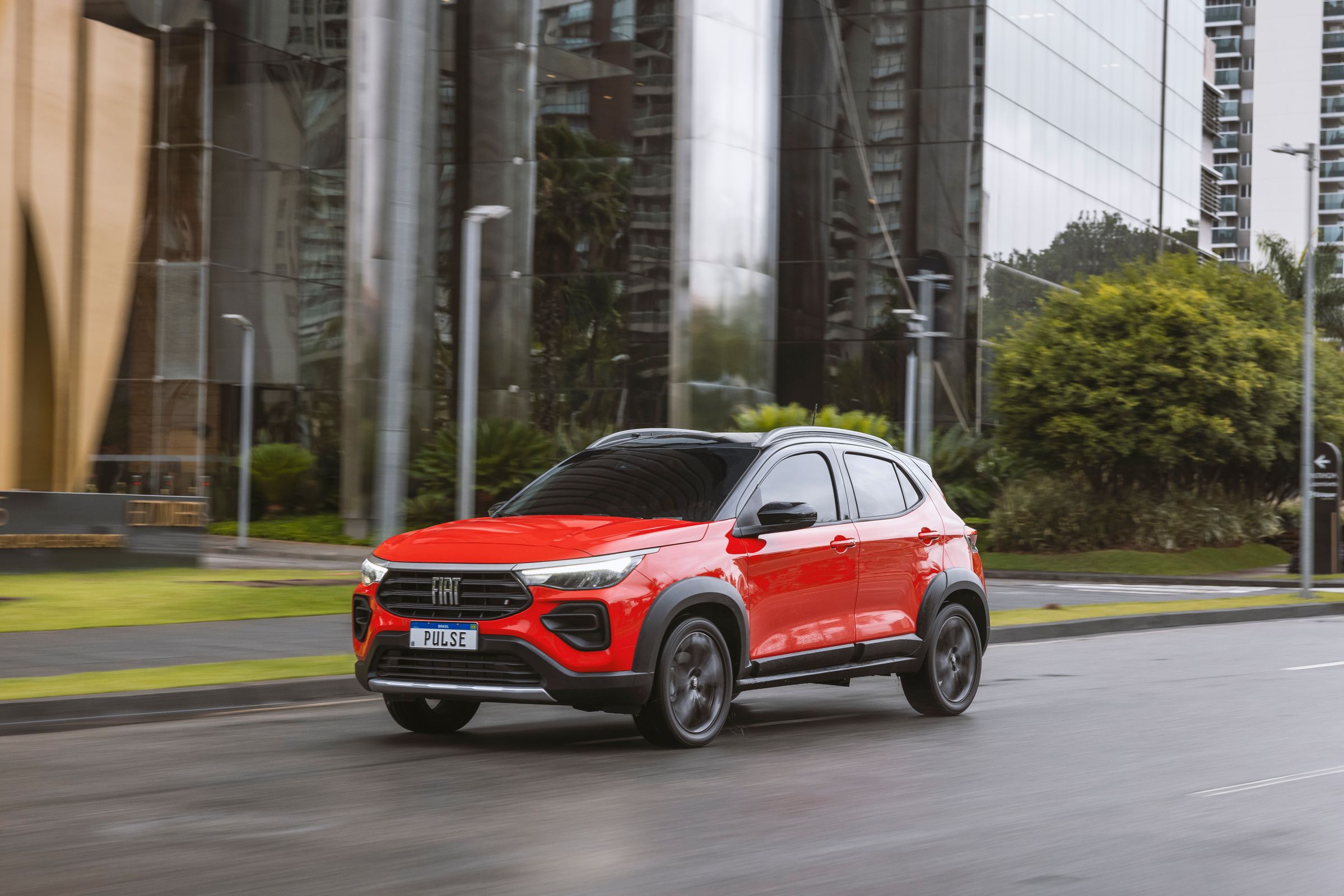
The hatches Argo and Mobi, each one with 39 thousand units, were 31% of total sales, while the brand’s two SUVs, Pulse and Fastback, fifth and seventh in Fiat’s internal ranking, got a much lower share: just 18.5%, with 46.6 thousand vehicles sold.
Third in the ranking, General Motors sold 178.7 thousand vehicles in the year, with a strong contribution from the Onix line. The Onix hatch sales alone represented three in ten Chevrolet vehicles negotiated: 54.4 thousand units, 30.4%. Adding the sedan sales, the Onix family contribution jumps to 96.5 thousand, 53.9% of the brand’s total.
GM’s three SUVs achieved discreet numbers and, with 37.6 thousand registers, represented 21% of the brand’s sales. The Tracker entry SUV was responsible for most segment sales, with 34.4 thousand units and 19.2% of the brand’s sales.
Toyota and Hyundai, fourth and fifth in the ranking, have the highest SUV sales participation among the five main brands.
The Japanese manufacturer sold more than 105 thousand vehicles until July but is the brand with the more uniform product sales distribution. Among its six models, the Hilux pickup was the bestseller with 25.9 thousand licensings, 24.5% of the brand’s total.
The Corolla Cross SUV sold 23.8% (25.2 thousand), and the Corolla Sedan 22.4% (23.7 thousand). The Yaris hatch and sedan together reached 20.9%.
Considering the Argentinian sport-utility SW4 8.1 thousand deliveries, 7.7%, all Toyota’s SUVs represent 31.5% of the brand’s sales, still under the market’s average.
Currently offering only three volume models in Brazil, all they locally produced, 48% of Hyundai’s 96.2 thousand deliveries until July were HB20 hatches (46.1 thousand) and HB20 sedans (14.3 thousand).
The Creta, the only brand’s SUV in Brazil (the Tucson, assembled and sold by CAOA Hyundai since last year, had insignificant sales), reached 35.3 thousand units. Exactly the same 36.6% SUVs share in the total market.
VW’s SUV offensive is the exception
Volkswagen, the second brand in the sales ranking, is the only exception. Its SUVs have a share over the market’s average: the T-Cross, Nivus and Taos responded for 42% (75.6 thousand) brand’s deliveries in the first seven months.
Nonetheless, the Polo was VW’s most negotiated model. The hatch sold 54.2 thousand units, 30.1% of the brand’s deliveries, as the T-Cross, currently the country’s best-selling SUV, got 22.5%.
Therefore, VW confirms that SUVs may be important but are not the main reason to be among the Brazilian market’s top brands.
Complexo com pistas de testes para desenvolvimento de tecnologias e veículos começa a ser construído…
Modelo lançado em 2019 bateu recorde de licenciamentos no ano passado
Rodrigo Soares é vice-presidente e Fernando Alves, diretor financeiro
Nova tecnologia do modelo promete recompor até 97% da capacidade energética da bateria em 9…
São 20 vagas e os interessados devem se cadastrar no site da Fundação Iochpe até…