Falling income, high prices and expensive credit take retail sales into a plunge
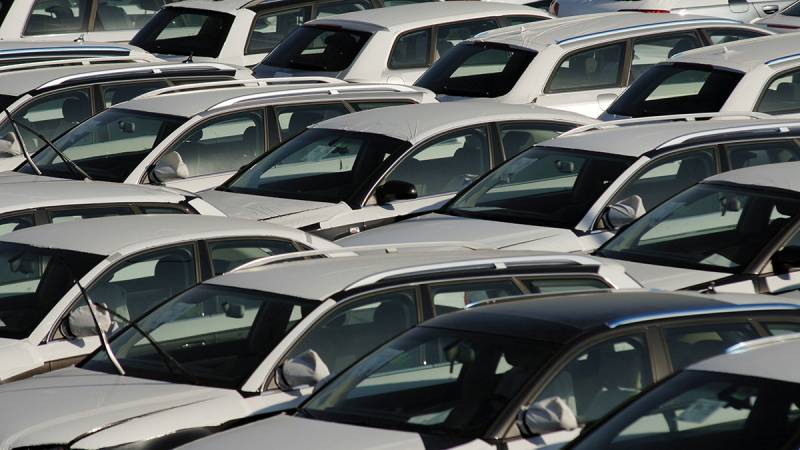
With no more plants halted and ordering lines reduced, the Brazilian vehicle market begins to show its real face – and it is quite ugly. The numbers of automobile and light commercial vehicles licensed up to mid-September indicate a possible sales plunge in 2022. If there was a lack of electronic components and cars for delivery, what is beginning to lack are customers.
Many negative factors are holding the demand, and they shall keep holding it for a horizon of no less than a year ahead. The population’s income fall, eroded by inflation, contrasts with the high price of the vehicles – the cars’ average price stays around R$ 130 thousand.
On the other hand, financing, which could help to solve this problem with light installments, keeps expensive and restricted: the average interest for physical persons’ financing reaches 30% a year, according to data from the Central Bank, while the delinquency rate is raising, reaching almost 5%.
These factors are pressing the demand down and challenging the projections already revised last July by the manufacturers’ and dealer’s associations, Anfavea and Fenabrave. Both forecast zero growth, as last year.
Weak market
In the first half of September, with ten business days, 73.5 thousand light vehicles were licensed, 7.3 thousand per day, according to data from Bright Consulting, which estimates the sale of 178 thousand units in the whole month.
If confirmed, the first nine months of 2022 will add up to almost 1.4 million automobiles and utility vehicles sold. Therefore, close to 600 thousand vehicles will lack to sell in the last trimester to reach the 2 million forecasted by the associations.
It will be difficult to achieve the 200 thousand vehicles a month, considering that only in August the sales came close to this number – the month with more business days in the year – 23 – when the results were the best in the last 19 months, with 194 thousand light vehicles delivered.
With no plant at all halted by lack of components in August, for the first time in 18 months, production reached the best result in the year and was able to meet part of the backorders.
With customers lacking in the dealers, the manufacturers began to announce promotions, something not seen since 2019, and are directing cheaper models to the rental companies that, according to estimates of the sector, demand to buy from 600 to 700 thousand vehicles that could not purchase in 2021 and 2022.
The larger demand by the rental companies confirms the sales mix change verified in August and September. If until mid-year, the most expensive models – especially SUVs over R$ 120 thousand – were more than half of the ten best-selling cars in the country, in the last two months it has changed.
Of the ten best-selling models in August, seven are compact entry cars – even with the entry-level positioned many steps over most consumers’ capacity – as the Volkswagen Gol, Hyundai HB20, Chevrolet Onix and Onix Plus, Fiat Mobi and Argo, and the Renault Kwid, exactly in this order.
If the plants succeed to produce in the same pace as in August – which is improbable, as the shortage of chips and other items still affecting the industry – and the rentals demand keeps high and supplied, it is expected for this year a market much close to 1.9 million than 2 million light vehicles, a 2% fall compared to 2021, in one more year without evolution.
Pedro Kutney is a journalist specializing in economics, finances and the automotive industry. He signs the column Observatório Automotivo about the automotive sector and works as editor of AutoData magazine. With over 35 years of profession, he was editor of the Automotive Business portal, Automotive News Brasil and Agência AutoData. He was also Finance assistant editor at Valor Econômico and reporter and writer of magazines Automóvel & Requinte, Quatro Rodas and Náutica.
Complexo com pistas de testes para desenvolvimento de tecnologias e veículos começa a ser construído…
Modelo lançado em 2019 bateu recorde de licenciamentos no ano passado
Rodrigo Soares é vice-presidente e Fernando Alves, diretor financeiro
Nova tecnologia do modelo promete recompor até 97% da capacidade energética da bateria em 9…
São 20 vagas e os interessados devem se cadastrar no site da Fundação Iochpe até…