Marlon Arraes confirmed studies by the Mining and Energy Ministry at Simea
By Alzira Rodrigues | 8/17/23 | Translated by Jorge Meditsch
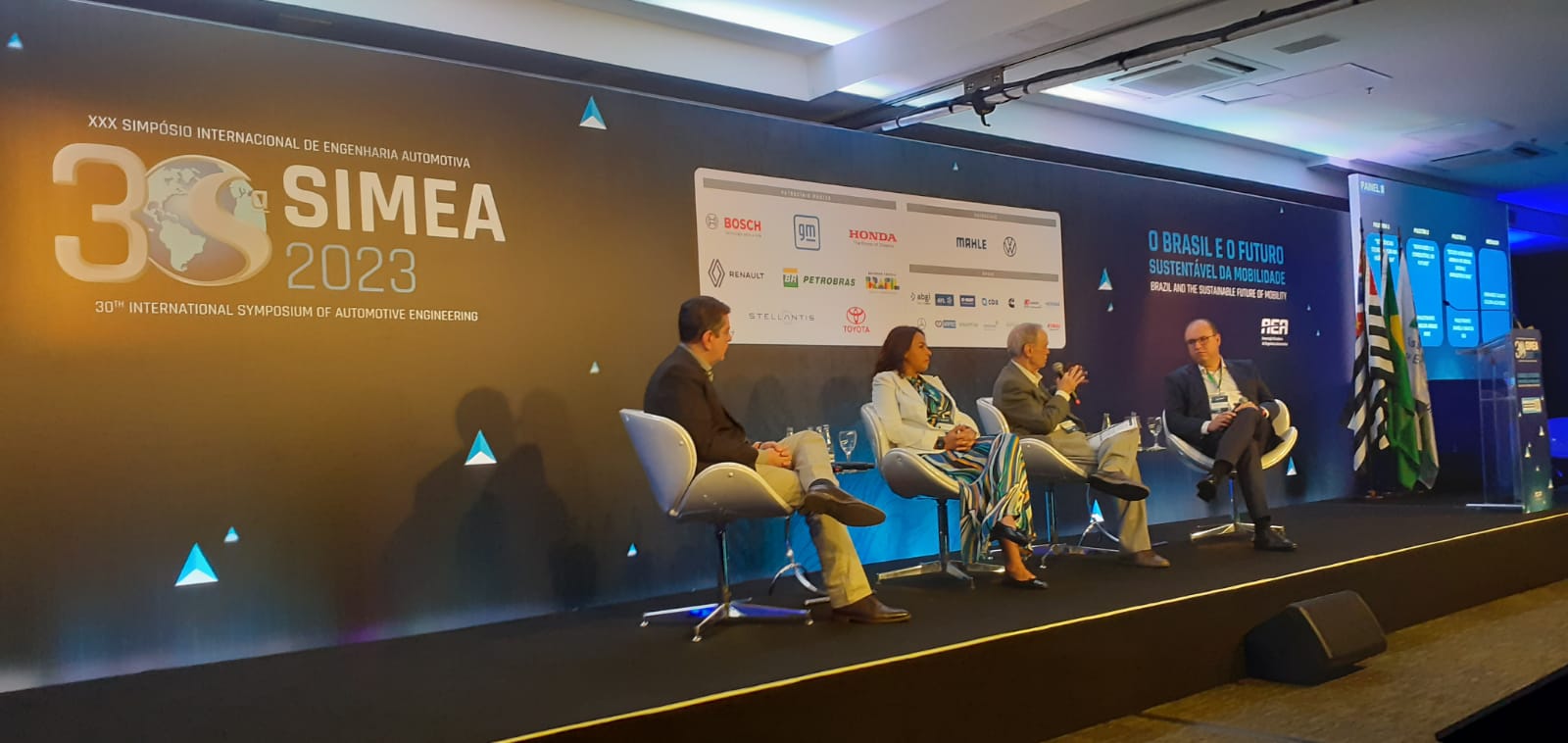
On the second day of AEA’s International Symposium of Automotive Engineering (Simea), on Thursday, 8/17, a panel about the future of sustainable mobility focused on energy area trends, federal government programs and urban mobility.
Everton Lopes, AEA’s vice president, mentioned that flex-fuel vehicles are currently 83% of the country’s fleet and cited ongoing studies about incentives for ethanol by the automotive sector and government.
“The only way is the financial advantage”, he said. “Among the ideas debated, there is a discount bonus for users who opt exclusively for ethanol and lower taxes for ethanol-exclusive vehicles.
Marlon Arraes, director of the Biofuel Department of the Mining and Energy Ministry, talked to AutoIndústria about the incentives debated to encourage the use of ethanol, currently limited to 30% of the flex-fuel vehicles in use in the country:
“It’s a project being discussed in our ministry that depends on legislation”, he said, mentioning it could be a good idea to include it in the second phase of Rota 2030, which comprises new emission reduction goals. He recalled that one of the major novelties of this new phase of the automotive program is measuring emissions from well to wheel.
One day before, Arraes said the new cycle of the Rota 2030 program, from 2023 through 2027, could be extended to 2028. “I heard something about this, but as far as I know, there is nothing yet defined”, he said.
The government representative presented at Simea’s panel the current stage of government programs, such as RenovaBio and The Fuel of the Future. The government should open a public consult for the first one next month.
“We will have diverse biofuel policies, including the agriculture area and state taxes. The important is that Brazil defines the routes to follow. We have alternate to reduce CO2 emissions that do not depend on expenses with incentives to the user as happens in other countries with the electric car”, he said.
About the E30 proposal, which would mean increasing the ethanol proportion in gasoline from the current 27% to 30%, he said a working group would study the measure’s feasibility and that, for now, it is only a government proposal.
Daniela Swiatek, from Getúlio Vargas Foundation (FGV), presented a study about urban mobility in large cities. The Big Data project, which studied mobility in five large cities of the region, including South American countries and Mexico, will be implemented in São Paulo next September 1.
“Public policies can’t be made over suppositions, and therefore we defined an evidence-based project. The municipalities need help from the private initiative. Only this way there will be advances in sustainable mobility”, she said.
Picape híbrida teve somente 1,8 mil unidades licenciadas em quase dois anos
O presidente da entidade prevề cerca de 10 mil visitantes entre os dias 17 e…
Primeiro SUV da plataforma Neue Klasse chega por aqui com autonomia de 570 km ao…
Algumas empresas conseguirão ampliar seus volumes, enquanto outras perderão espaço mesmo em um mercado maior…
Foram financiadas 3,78 milhões de unidades novas e usadas no primeiro semestre, 10,9% a mais…
Executivo responderá mundialmente pelo cumprimento de metas do grupo